
for recorder, counter-tenor, theorbo, baroque cello and electronics
Due for premiere in December 2023 by Ensemble 1604.
Programme Note
Alas there are few that find the narrow way
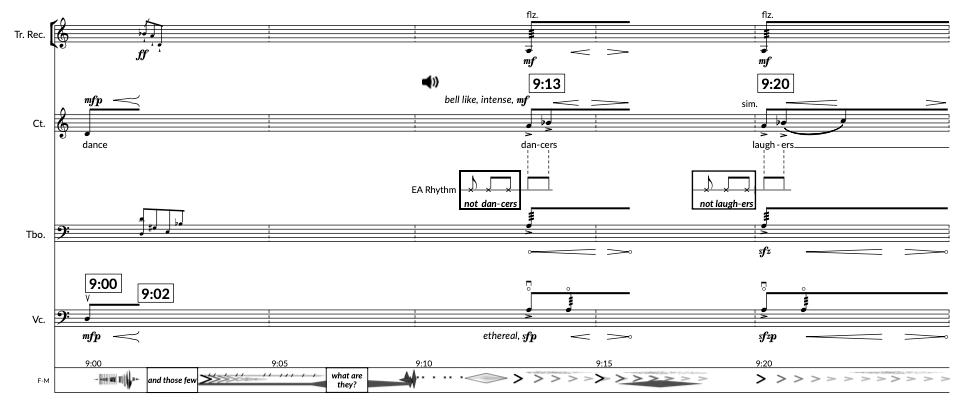
And those few, what are they?
Not dancers, but mourners:
Not laughers, but weepers;
Whose tune is Lachrimae,
Whose musike, sighes for sinne;
Who know no other Cinquapace, but this, to heaven
In 1633 William Prynne, who was strongly puritan, published his Histrio Mastix, the Player’s Scourge and Actor’s Tragedie. This treatise was a polemical attack on popular Elizabethan and Jacobean interests including theatre, music and dancing. In it he fleetingly refers to John Dowland’s Lachrimae Pavane in a passage that retells Jesus’s story of the straight gate, where the path to heaven is through devout faith. Prynne is selective in his retelling of this idea (Prynne’s narrow way). Jesus tells the disciples that they way is through faith, but that there is always time for repentance. For Prynne no other life than absolute faith and pious devotion could be worthy of eternal life. In these few short sentences he denounces dancing, laughing and any music that doesn’t express the extreme piety he values.
My work is made in defiance of Prynne’s treatise, as a musical riposte to his philosophies. Fragments of dances composed by Dowland (5-stepped galliards, or cinquapace) gradually assert themselves, gathering greater confidence and significance as the piece progresses. Prynne’s text is woven into the work, interspersing episodes of music that reference English Renaissance obsessions with the birth and fall of man with text taken from Genesis in the King James Bible.
My very great thanks to the follow who performed the pre-recorded voices:
Robert Cooper
Rosie Hart
Kay Stephen
 Timothy Cooper